
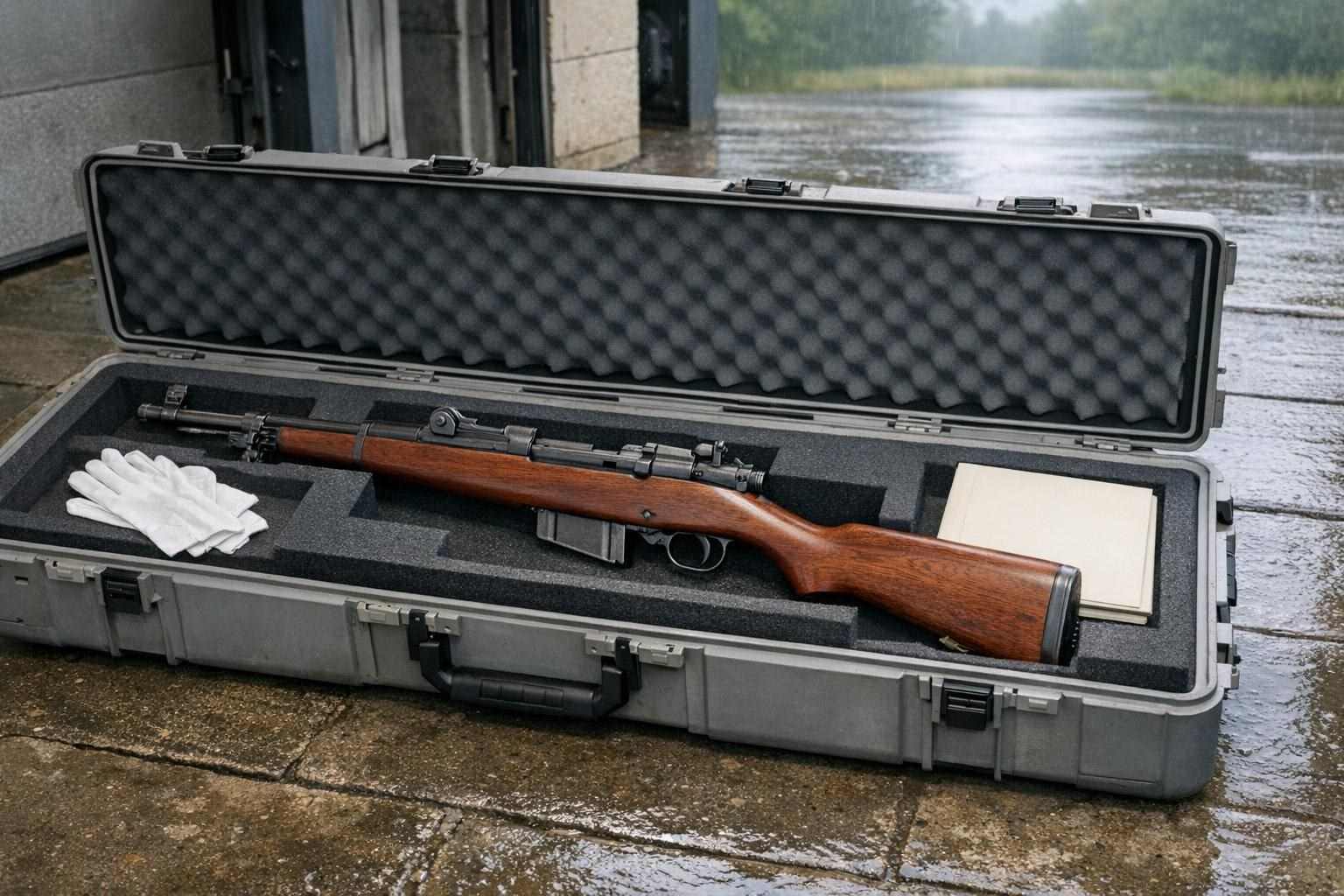
Most museum rifles are displayed to look old. But some are made to look very old indeed in order to convince visitors of the age of the metal and the wood of the stock. Sometimes even the characteristic markings are fake, imported from a commercial supplier of replicas for collectors and for use in films and TV dramas. The museum label has to distinguish appearance from reality and to reveal uncertainty when there is uncertainty. However, every uncertainty need not be revealed.
This means that the label for an object forms part of the object's biography. Here the curator describes what happened to the object before it arrived in the museum, how it was identified as belonging to the army and what has happened to it since.
The label begins with the problem the equipment was meant to solve
Objects are best explained by reference to the military problem with which they were designed to deal. The infantryman's rifle is a manageably sized combination of range, reliability and firepower. The field telephone was a means by which to maintain communication while troops moved about over difficult terrain. The component parts for vehicles were required to meet the special demands of military use – protection in combat, repair in the field.
The distinction between an original design and the individual displayed object must be clearly understood by museum visitors. A museum can display a genuine design in the form of non-original objects, but the visitor must be made aware of the difference between the design and the individual displayed objects. The label must never give the impression that the displayed object(s) were used for the events historelically associated with the design.
An object's biography of where it has been can be more solidly fixed by following components as they have moved from place to place. A rifle's receiver, its stock and but or butt plate, the metal bandwidths used for screws or bolt clamps, its sights, original finish and engravings or makers' marks are all components which would have individual histories.
Markings offer clues, not automatic proof
Serial numbers, acceptance marks, manufacturer's marks, government test and inspection marks, repair and renovation notations and other types of written or impressed notations on an artifact are important pieces of information concerning its history. However, while these marks on an artifact identify its history, the mark itself is not in itself conclusive evidence of an artifact's history and must be considered in context with other information concerning the artifact.
Just because a number or a word appears on a museum object does not mean that the number or word was there when the object was new. In many cases numbers can be restamped, or even completely removed. As well, parts can be replaced at any time during an object's service. Conversely, a modern reproduction can have its markings copied from the original, to make it look as though it was made when the original was.
Care needs to be taken when using terms in a label to differentiate between evidence and assumption and between what has been documented and what has been identified. Thus "identified as" is not the same as "documented as". "Attributed to" is used to indicate that there is room for alternative interpretation. "Possibly used in" is less than a transfer record or service history.
Components reveal whether the object has a mixed history
While components of an object might have been changed while it was in military service (e.g., parts might have been replaced or repaired and later reFinished), later reworked or upgraded, such an item can still be an original object that has been used for military service. It would, however, no longer be an object of a single historical individual. Later assemblies of parts of original objects are not even original objects of military service in their entirety.
The terms 'assembled', 'composite', 'reworked' or 'partially original' indicate that an item has been made up of different components, possibly restored or repaired at some stage. Such an object need not be of less historical interest than an entirely complete 'original', since it shows how the military services dealt with items as serviceable articles and employed them as functional units despite alterations having taken place at various times.
Work of conservation must not be confused with historical changes to an object. As objects pass through the hands of Museums and conservationists, they will inevitably undergo changes which must be recorded by the Museum. The finished object will then represent the Museum's best understanding of the original item and the changes which have occurred since it was created.
Provenance carries the story beyond the metal and wood
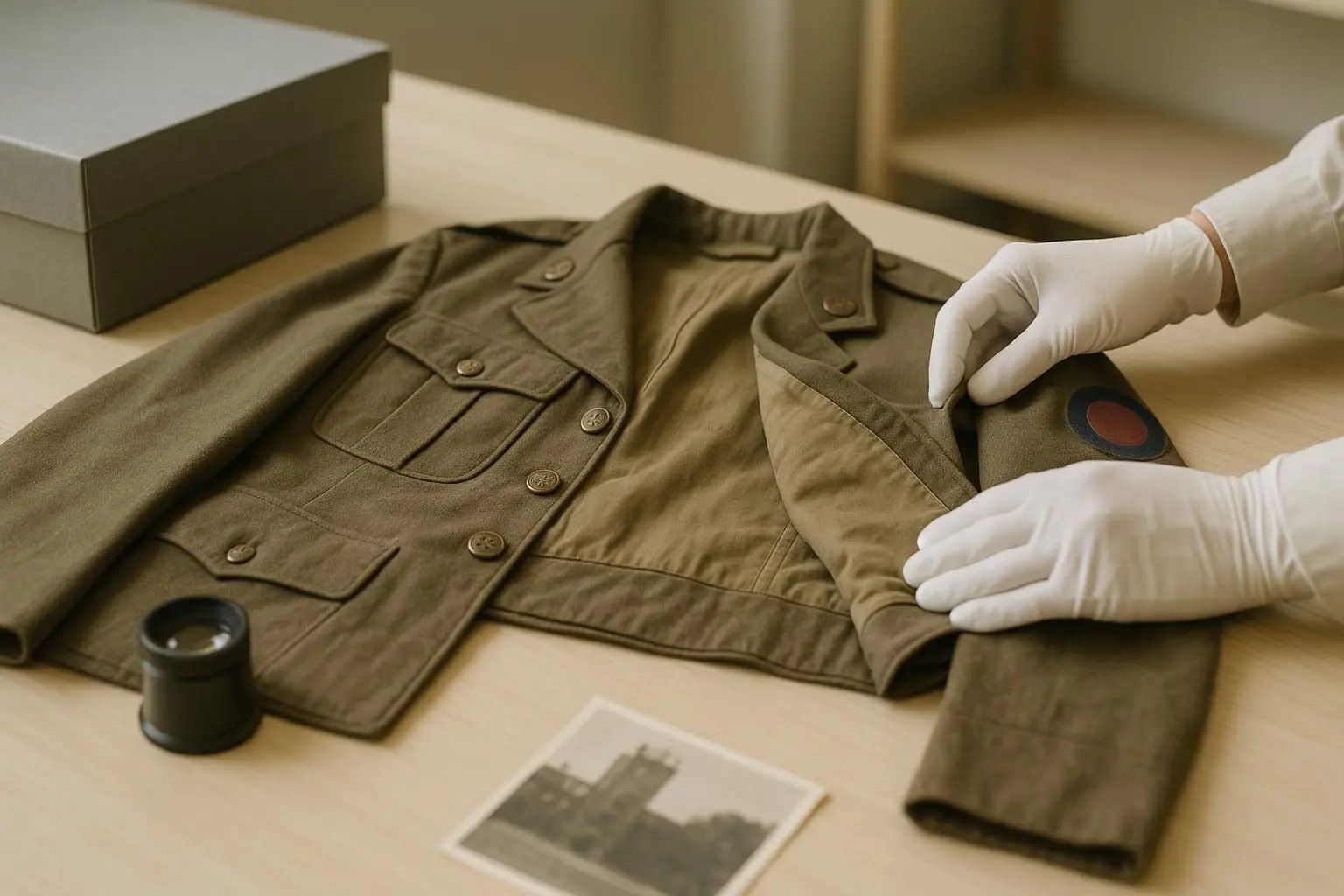
In simple terms, artifact provenance is the record of an object's ownership and history of where it has been. Often this is contained in the museum's or collector's acquisition documents, such as receipt from a dealer, correspondence with a donor, museum's inventory card, old black and white photograph, and even the written account of a veteran who served with the object as it was used.
Object history as provenance is basically a list of previous owners. With sufficient evidence of an object's past, a museum label can assert with greater certainty where an object has come from. A label for an object with complete provenance might read that it was transferred from another collection or that it was recovered from a specific battlefield or location.
However, even the strongest provenance, i.e. the historical ownership of an object, can change our interpretation. For example, an object first appearing in a museum long after the conflict and for which there is no documentation from the period it was produced can be a reproduction or even an object of unknown origin that was produced later. The lack of any documentation for an object is not proof of anything but it does affect our interpretation of the object.
Reproductions can be historically useful without being originals
Historical reproductions are relevant in military history museums for example to demonstrate function of missing parts of historical equipment, to show appearance of equipment that cannot be shown in original form for conservation reasons and for the interpretation of historical material when original artifacts are too sensitive to be handled by visitors.
It is also important to note that there are different kinds of copies, such as replicas, facsimiles, modern interpretations of historic objects, and reassembled objects made from parts found at different locations. The word you use depends on how much of the object has been copied and what that is.
Replicas and reconstructions are best displayed in relation to the actual artifacts, and this includes replacement components that have been added to an artifact after it has entered the museum's collection. Ensure these are identified close to the relevant object and that together they form a clear and informative display and do not merge into one historical 'story'.
Label language turns uncertainty into part of the record
In museum exhibits for historical subjects it is sensible to distinguish between the known facts, the matters that have been deduced and those that have changed. Informing visitors of a rifle's receiver having been changed, for example, or of a later sight having been fitted, can often be more valuable to them than a host of unspecified assertions about its use on various battles.
So, too, the old museum piece, both the original item and all of its subsequent changes, offers unique insight into military history, especially as it relates to the items used for warfare and how those items were supplied, maintained, used, and collected as relics of past conflicts. Thus the museum piece becomes far more than a simple old item that has been put on display.


Leave a Reply